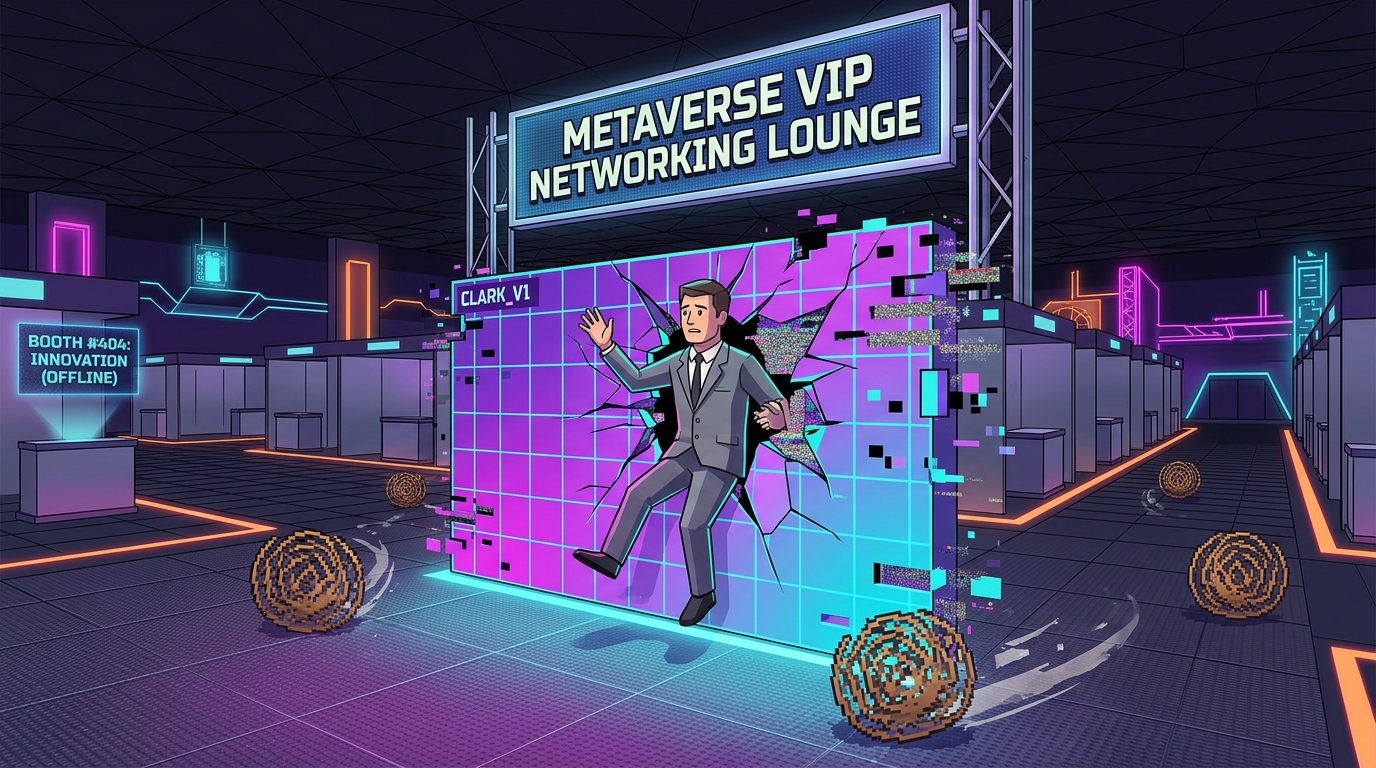
Trapped in the Virtual Drywall
Remember when brands spent hundreds of thousands of dollars buying virtual real estate in the metaverse? When every corporate consultancy claimed that by 2025, board meetings, product launches, and casual watercooler chats would take place in low-polygon digital realms?
I was there. And I have the psychological scars to prove it.
In the spring of that frenzied hype cycle, our agency was invited to a prestigious "Global Metaverse Brand Summit." We strapped on heavy VR headsets that felt like strapped-on toaster ovens, generated floating legless avatars, and logged into the virtual auditorium.
Ten seconds into the opening keynote, my avatar hit a physics glitch, clipped backward through the main stage drywall, and remained wedged inside an invisible digital beam for three straight hours.
Floating Torsos and Glitched Handshakes
While trapped inside the geometry of the virtual convention center, I observed the greatest spectacle in modern tech marketing history:
- Forty avatars with no legs floating aimlessly across empty grey conference rooms.
- A Fortune 500 CMO attempting to fist-bump an agency VP, resulting in their virtual arms getting tangled in a terrifying rubber-band collision physics spasm.
- Corporate virtual booths where companies spent $75,000 to display a pixelated PDF brochure that took 45 seconds to render in 240p.
- Someone's avatar's head spinning 360 degrees uncontrollably while their microphone broadcasted their dog barking in the physical background.
The $40 NFT T-Shirt Nobody Wanted
The centerpiece of this virtual extravaganza was the "VIP Digital Merch Lounge," where attendees could purchase digital designer hoodies for their avatars at the bargain price of 0.4 ETH ($1,200 at the time). The total sales across the entire three-day conference? Exactly two t-shirts, both bought accidentally by the lead developer testing the checkout button.
Why the Metaverse Didn't Replace Reality
The lesson from the metaverse marketing bubble wasn't that 3D technology or virtual worlds are useless. It's that technology must solve a real human friction point rather than inventing new ones:
- Nobody wants to wear a hot scuba mask to read an email. Two-dimensional screens and clean mobile web interfaces remain the most efficient tool for consuming information.
- Consumers value physical utility. Virtual sneakers don't keep your feet warm, and virtual billboards in empty servers don't sell actual soft drinks.
- Great marketing meets people where they already are. They are on Facebook, Instagram, TikTok, and Google search. They are not wandering around empty digital parking lots in Horizon Worlds.
Advertise Where Real Humans Actually Spend Money
Billions of active users scroll Facebook and Instagram every single day. See the highest-converting ad creatives and hooks currently generating real revenue across physical e-commerce and SaaS brands.
Analyze Real Meta Ads on FBAnalyzerSpy on Winning Competitor Ads with FBAnalyzer
Stop guessing what works. Uncover active competitor ads, winning hooks, and profitable creative angles in real time.
Analyze Competitor Ads Live →